Monday, May 23, 2011

Small steps for paralyzed man, giant leaps for treating spinal cord injuries

A device helps a man paralyzed from the waist down make an 'unprecedented' recovery, taking steps on a treadmill and regaining other key functions. The treatment could potentially allow 10% to 15% of people with spinal cord injuries to regain some use of their legs.


A 25-year-old Los Angeles man paralyzed from the waist down after being hit by a car in 2006 has regained the ability to stand, take steps on a treadmill and move his hips, knees, ankles and toes voluntarily as a result of an experimental treatment developed at UCLA and the University of Louisville.

Rob Summers has also regained some bladder and sexual function after intensive rehabilitation and two years of electrical stimulation to his damaged spinal cord with a device normally used for pain relief, researchers reported Thursday.

His recovery "remains unprecedented in spinal cord injury patients," who until now have faced a lifetime of paralysis, researchers from the University of Zurich wrote in an editorial accompanying the report in the journal Lancet. "We are entering a new era when the time has come for spinal-cord-injured patients to move."

The new treatment is "a very exciting discovery" that can probably be used to help 10% to 15% of people with spinal cord injuries regain some use of their legs, added Dr. John McDonald, director of the International Center for Spinal Cord Injury at the Kennedy Krieger Institute in Baltimore, who was not involved in the research. For those people, "it has the potential to make a dramatic difference in their lives."

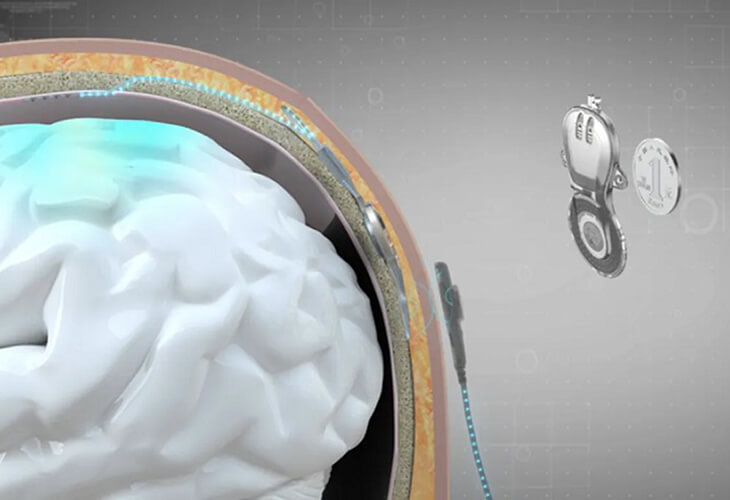
To achieve this milestone, researchers bathed Summers' spinal cord with a mild dose of electricity using a device that is normally used to treat chronic pain. The electrical stimulation apparently primed his nervous system to respond to signals from his limbs, allowing him to rise out of his wheelchair.

"To everyone's disbelief, I was able to stand independently the third day we turned it on," said Summers, who was a baseball player in his junior year at Oregon State University in Corvallis at the time of his accident. He completely supported himself, but needed some help with balance.

The treatment, devised primarily by UCLA neurobiologist V. Reggie Edgerton, is designed to activate a patient's spinal nerves just enough to make them responsive to sensory signals coming from the legs. The approach, which Edgerton has been using in animals for nearly three decades, is like using a hearing aid to amplify sound.

The technique "opens up a whole new set of possibilities … for people who have been injured for months or years," said Dr. Susan Harkema of the University of Louisville, the study's coauthor.

According to the Christopher and Dana Reeve Foundation, almost 6 million people live with some form of paralysis, about 1.3 million of them from a spinal cord injury. Such people lose not only limb function, but also bladder and bowel control, sexual response and other autonomic functions, sometimes including the ability to breathe on their own.

Researchers have previously used electrical pulses to activate nerves in the legs of spinal cord patients in a specific pattern that caused them stand or move in a walking motion. But in those cases, it is not the patient's brain but the computer that sends the pulses that has control of the activity.

Summers was completely paralyzed below the waist after being struck by a car in a hit-and-run accident in July 2006, although he did retain some feeling in his limbs. He spent three years in rehabilitation and physical therapy trying to learn how to stand and walk again, without success.

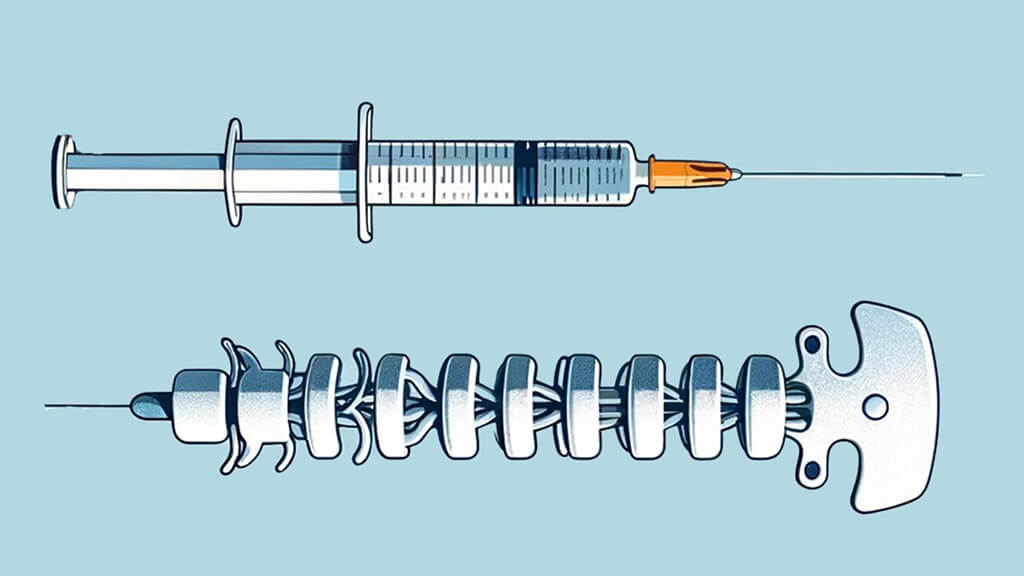
Then Dr. Jonathan Hodes of the Frazier Rehab Institute at the University of Louisville implanted the 51/2-inch-long epidural stimulation device next to his spine. The device is not optimal for this purpose, Edgerton said, but using it allowed the team to proceed without having to get a new device approved by the Food and Drug Administration. (A team led by Caltech bioengineer Joel W. Burdick is designing newer and better electrode systems.)

The 16-electrode device was placed in his lower back between the vertebrae and the dura, which covers the spine and keeps fluid in. A lead was buried under his skin and tunneled to a pouch above his hip.

The important thing, Edgerton noted, is that the device did not cause Summers to stand, as previous attempts at electrical stimulation have done. When Summers is sitting normally with the stimulus operating, nothing happens. But when he leans forward and puts some weight on the legs, muscle memory takes over and the spine sends signals to the legs that cause him to stand.

With more training, Summers also learned how to walk on a treadmill. Eventually, he developed the ability to move his legs, wiggle his toes, flex his ankles and make other movements voluntarily — as long as his spinal cord is being stimulated.

At first, "none of us believed it," Edgerton said. "We have no idea what the mechanisms are, but we are pretty sure it has resulted in changes in the brain."

And as Summers relearned these rudimentary activities, his autonomic functions also improved. He regained control of his bladder and bowels, as well as some sexual function.

"Not being able to walk and stand is devastating," Harkema said, "but these other things may be more important."

Dr. Amie B. Jackson of the Spain Rehabilitation Center at the University of Alabama at Birmingham, who was not involved in the research, said she was impressed that the therapy affected those autonomic functions "because that is a different type of nervous system."

Summers' overall health also began to improve, at least in part because of the exercise. He was able to discontinue a variety of medications for cardiovascular disease and pain. "That was important because they were very expensive," said Summers, who now attends the University of Louisville and helps coach the baseball team there.

The researchers emphasized that the electrical stimulation alone was not enough to get Summers back on his feet. Rather, it was a combination of the stimulation and the intensive rehabilitation, up to two hours a day.

Jackson speculated that this treatment could be combined with other therapies to provide even better, longer-lasting results. Once a patient has reached this stage, she said, it might then be possible to use stem cells to repair the spinal cord and make the improvements more permanent.

Everyone involved cautioned that the experiment involved only one patient and would need to be replicated in others before becoming a mainstream therapy. Harkema said the team will immediately begin testing it on four other patients with injuries similar to Summers', then will try it on others with different types of injuries.

Eventually, he said, the team may study paralysis caused by other types of problems, such as strokes or disease.

As for Summers, he said his goals were "to stand completely independently, take steps in a more functional manner, and eventually try to play baseball again."

By Thomas H. Maugh II, Los Angeles Times

Read the Full Post!
 

Friday, April 22, 2011

Groundbreaking Discovery; Researchers Regenerate Nerves Using PTEN Gene

Reeve Irvine Research Center in collaboration with Harvard University's Associate Professor of Neurology, Zhigang He, have fundamentally changed the history of curing paralysis from spinal cord injury. Through a groundbreaking discovery involving the PTEN gene, researchers have regenerated nerves in the damaged spinal cord of mice responsible for movement and sensation in the body.

Read the Full Post!
 

Thursday, February 03, 2011

Cancer Drug May Aid Nerve Regeneration after Spinal Cord Injury

The cancer drug Taxol has the potential to assist nerve regeneration following a spinal cord injury, according to researchers.

The study, which has been published on the Sciencemag website, details how the drug can help in the regeneration of damaged cells in the central nervous system following a spinal cord injury.

According to the press release, Taxol "stabilizes growing nerve cells and reduces the barrier of scar tissue", two of the of the major obstacles when it comes to nerve regeneration.

And in a copy of the study sent to me by the Kennedy Krieger Institute detailing the test results it states that Taxol or Paclitaxel,which is used to treat ovarian, breast and some forms of lung cancer, "reduces fibrotic scarring and stimulates the capacity of axons to grow after spinal cord injury (SCI)."

Scientists from Germany, the Netherlands and the United States were involved in the trial which involved giving Taxol to rats, according to the Kennedy Krieger Center news page. The drug was continuously pumped into the site of a partial spinal cord lesion and within a short length of time the rats began to show a marked improvement in their mobility. The rats were given Taxol at 256 ng a day, less than would usually be given for chemotherapy treatment.
Dr. Andres Hurtado is the study author and a research scientist at the International Center for Spinal Cord Injury at the Kennedy Krieger Institute, he said:

“The drug essentially reorganizes the cells’ microtubules allowing them to ignore ‘stop signs’ and to regrow through diminished scar tissue."

“It is a breakthrough for the cells and it puts us on a very promising path.”

The scientists say that further research is required before clinical trials can be carried out and it also needs to be determined whether Taxol works as well when it is used in the treatment of older nerve injuries.
Read the Full Post!
 

Tuesday, October 12, 2010

First Embryonic Stem Cell Treatment Tried on Spinal Cord Injury

A California bio-tech company has begun testing an embryonic stem-cell drug treatment on a patient with spinal cord injuries, marking the first time a drug made with embryonic stem cells has been used on a human.

The patient was enrolled at Shepherd Center, a spinal cord and brain injury rehabilitation center in Atlanta.

In order to participate, the patient had to have been injured within the last two weeks. The company, Geron, hopes to enroll another eight to 10 patients in the study.

The stem-cell drug, known as GRNOPC, contains cells that turn into oligodendrocytes, a type of cell that produces myelin, a coating that allows impulses to move along nerves.

When those cells are lost because of injury, paralysis can follow. If GRNOPC1 works, the progenitor cells will produce new oligodendrocytes in the injured area of the patient's spine, potentially allowing for new movement.

Because this is an early stage study, researchers are primarily concerned with the safety of the treatment.

"When we started working with human embryonic stem cells in 1999, many predicted that it would be a number of decades before a cell therapy would be approved for human clinical trials," Dr. Thomas B. Okarma, president and chief executive officer of Geron said in a statement.

Embryonic stem cells have been at the center of funding controversies because the research involves destroying human embryos, which some have argued is akin to abortion.

But, many researchers consider embryonic stem cells the most versatile types of stem cells, as they can morph into any type of cell.

While a milestone in the technology, the drug is still a long way from being proven and reaching the market. It still faces many years of testing for effectiveness if all goes well in the early stage study.

For Patient Enrollment Information, click here.
Read the Full Post!
 

Wednesday, October 06, 2010

Stem Cell Trial Offers Hope for Patients with Spinal Cord Injuries

A provocative video of two rodents with spinal cord injuries was shown to an audience gathered Tuesday at the Detroit Marriot for the second day of the World Stem Cell Summit.One of the rodents dragged its left hind leg, suffered from incontinence and couldn’t stand. The other rodent had an injection of embryonic stem cells and appeared to have more mobility in its back legs.

The video was aimed at showing hope for the world’s first clinical trial using embryonic stem cells in humans. California-based Geron Corp. company has received approval from the Food and Drug Administration to inject the stem cells into the spines of patients with spinal cord injuries, initially to determine safety.

“While the animal is not normal, there is some return of the muscles,” said Thomas Okarma, Geron president and chief executive officer.

The research offers hope for those who have sustained a spinal cord injury, which leads to paralysis. Depending on the location of the injury, people with spinal cord injuries lose the use of their legs, and sometimes the loss of mobility in their arms, hands and even their ability to breathe.

Sabrina Cohen of Miami Beach lost the use of her legs and hands following a car accident in 1992.

“The first stage of the trial is to prove safety; that’s huge,” said Cohen, 32, said before the presentation. “And I hope it will be an effective treatment for injured individuals.”

By: Kim Kozlowski / The Detroit News
Read the Full Post!